Why Being “The Strong One” Is Burning You Out
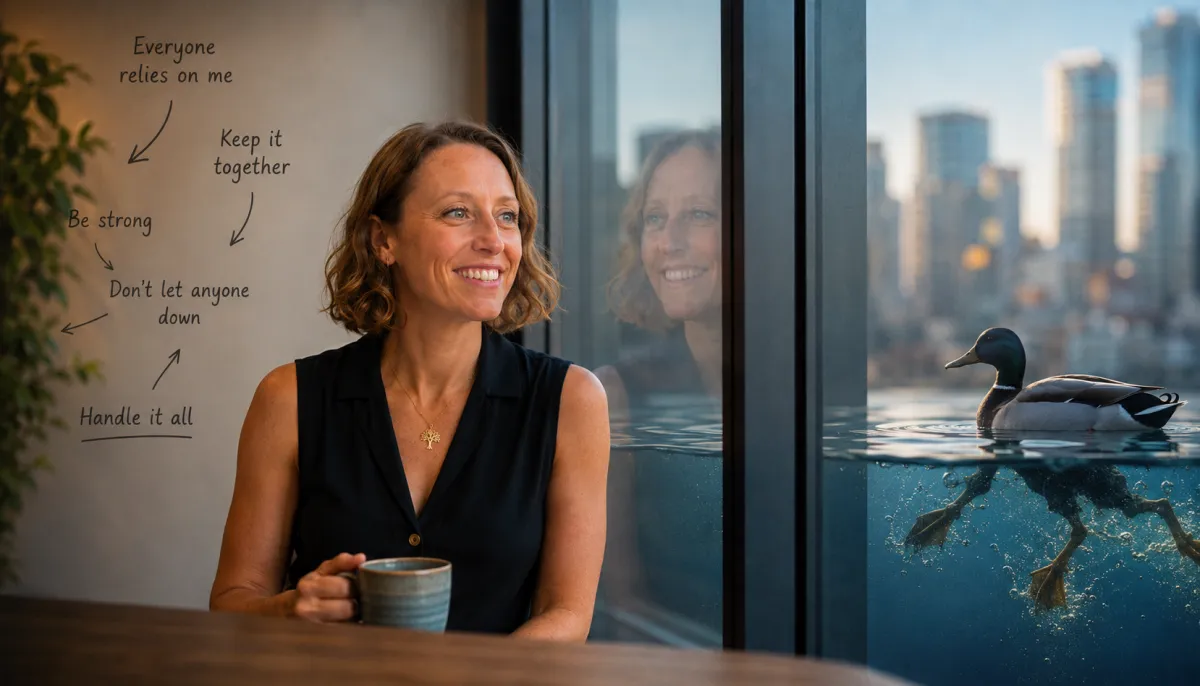
There’s a version of burnout that doesn’t look like falling apart. It looks like holding everything together. It looks like being the person everyone calls when something goes wrong — the one who performs brilliantly under pressure, who keeps the room calm while their own nervous system runs at full capacity underneath. Being the strong one feels like a strength, and for a long time it probably was. But the identity that made you capable is often the exact thing driving your burnout. Not because you’re doing anything wrong, but because when your sense of self becomes fused with being dependable, exhaustion stops reading as a warning signal. It starts feeling like the job.
In over 20 years working with high performers, executives, and founders, I’ve seen this pattern more consistently than almost any other. The people carrying the most are frequently the last ones anyone thinks to check in on. And the longer that goes on, the more expensive it becomes.
What Does “The Strong One” Identity Actually Mean?
Being the strong one isn’t just a role. It’s a sense of self that develops over time, usually through environments where being capable created safety, reliability brought approval, or being low maintenance kept the peace. You learn, often without realising it, that being useful means being valued. That coping without complaint is a form of competence. That others depending on you is something close to love.
Over time, those lessons harden into identity. You stop doing strength and start being it. And that’s the point where the pressure changes psychologically, because you’re no longer carrying responsibility for external reasons. You’re carrying it because stepping back would feel like stepping out of who you are.
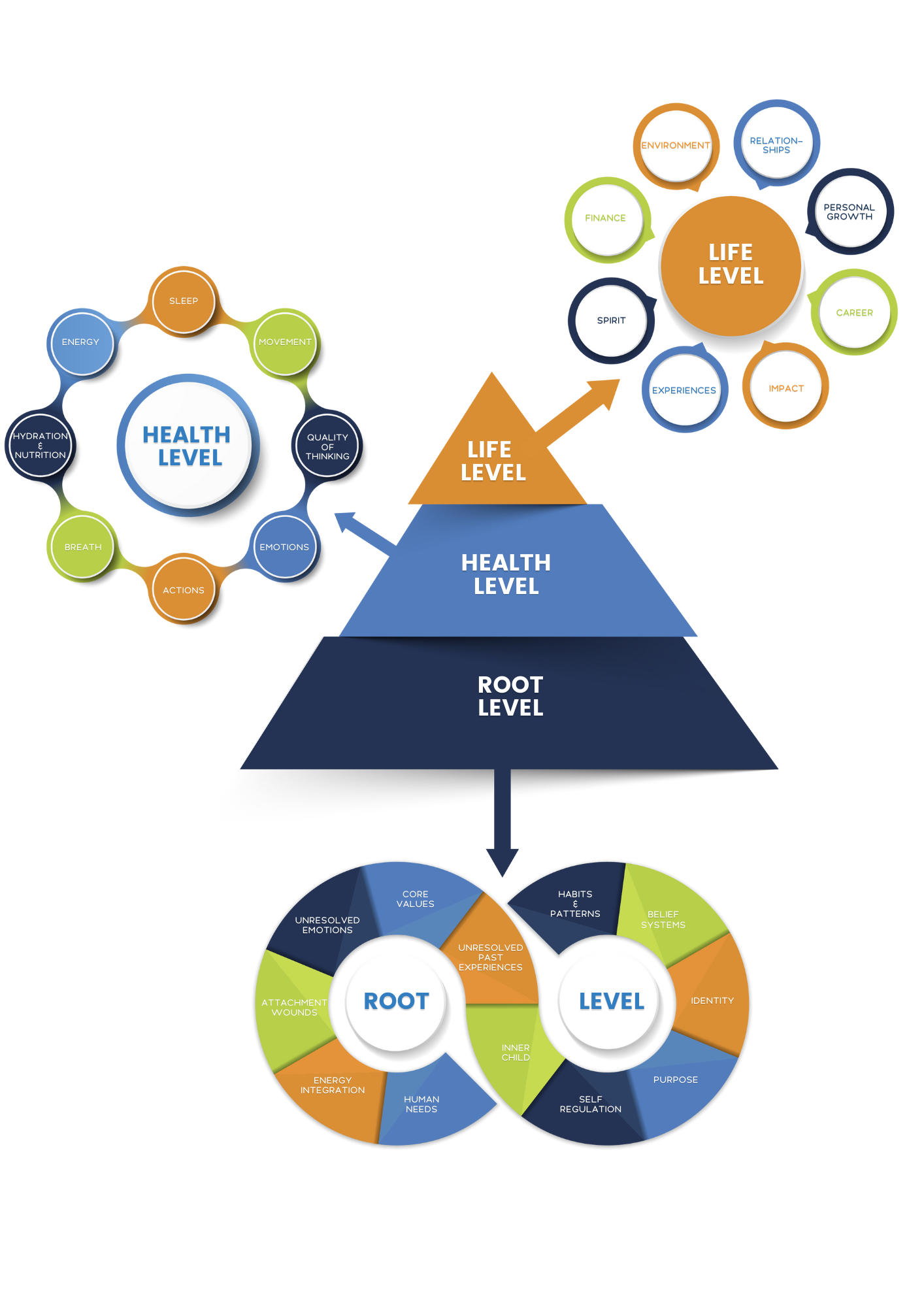
This is what I call the Root Level of the Stress-Performance Pyramid — the layer of behavioural conditioning, identity drivers, and nervous system patterns that most wellbeing advice never reaches. Most people try to address being the strong one at the surface: better routines, clearer boundaries, more time off. But when the pattern is rooted in identity, those adjustments don’t hold. You organise the stress more neatly without changing what’s driving it.
Why Does Being Dependable Start Feeling Heavier Over Time?
The weight builds gradually, which is exactly why most people don’t notice it happening.
At first, being the person others rely on feels meaningful. You’re trusted. Needed. Effective. Your capacity to absorb pressure and keep performing becomes the thing that defines your professional reputation, your role in relationships, and often your sense of worth. That works until it doesn’t.
What shifts is the accumulation. Responsibility that felt temporary starts to feel permanent. The line between things being handled and things being permanently owned gets blurry. And because you’re still showing up, still delivering, still holding everything together on the outside, nobody — including you — fully registers how much internal resource it’s costing.
Data from our Stress-Less Scorecard, completed by over 1,000 high performers, makes this visible. 67% said they feel pressure to appear strong while hiding their stress. 66% said their responsibility consistently outweighs their self-care. 59% said carrying the emotional weight of others contributes to their loneliness and disconnection.
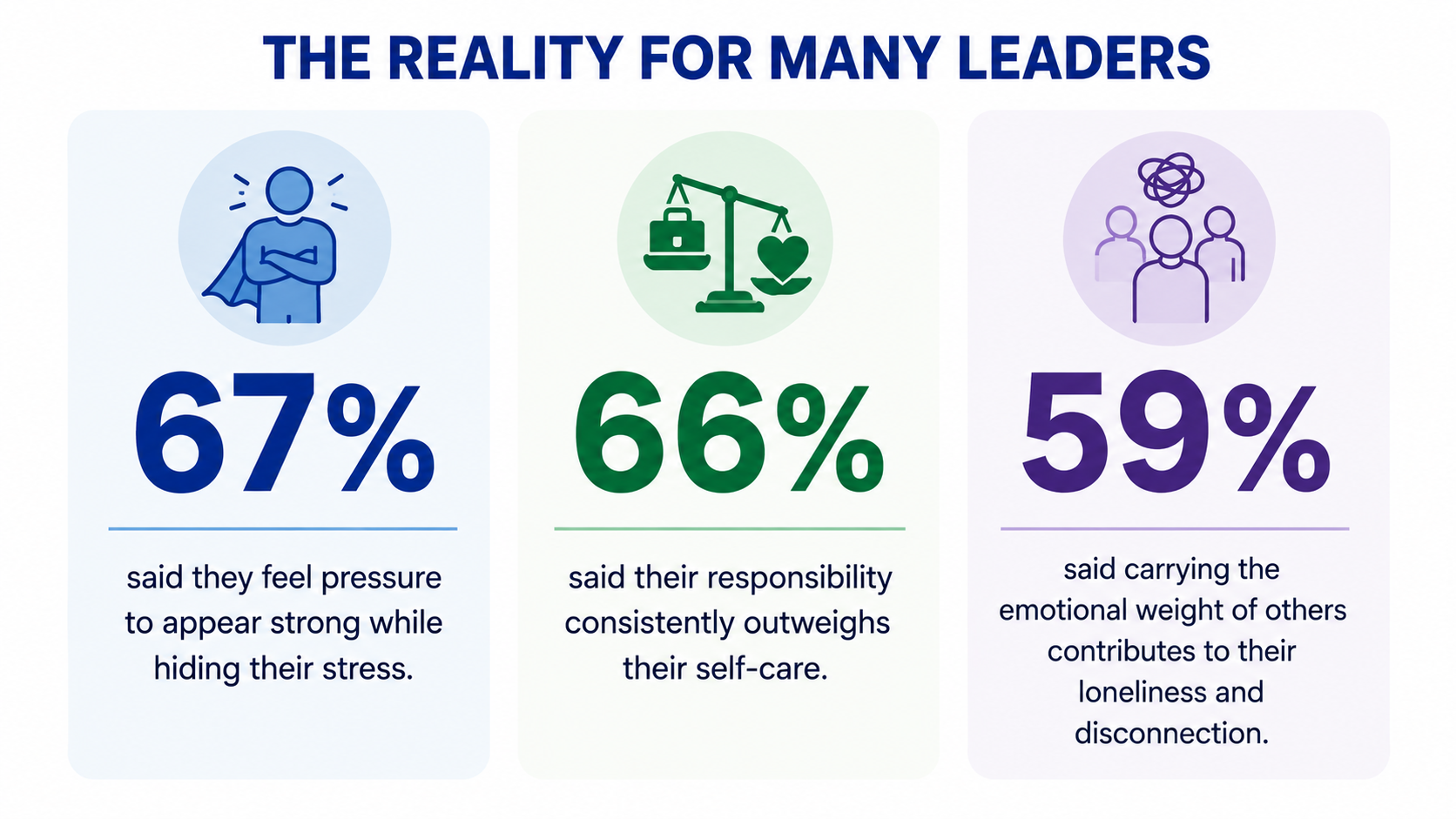
These aren’t numbers from people who are struggling visibly. They’re from people who are functioning. That’s the point.
High functioning burnout is a state where someone is still performing, still showing up, still delivering — but the internal cost is exponentially higher than it used to be. Because there’s no visible collapse, neither the person experiencing it nor the people around them tend to name it for what it is. (Maslach, Schaufeli & Leiter, 2001 — Annual Review of Psychology)
Three Patterns That Show This Is Happening To You
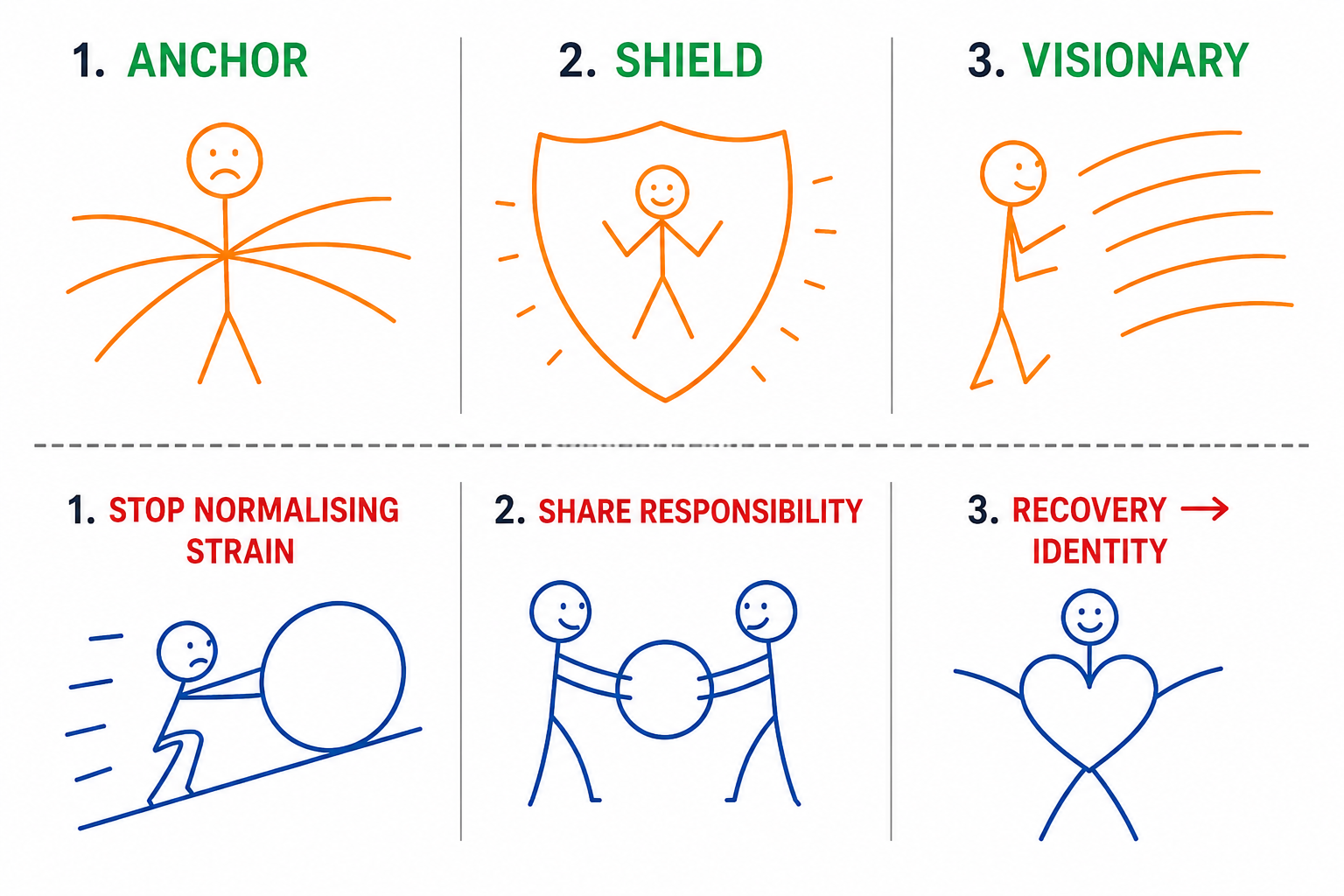
I consistently see this identity show up in three distinct ways. Most people recognise themselves in at least one, and many move between all three depending on what’s happening in their life.
The first is what I call The Anchor. This person becomes the stabiliser for everyone around them — the family, the team, the organisation. They’re always anticipating problems before they happen, managing tension, thinking three steps ahead. Responsibility stops feeling temporary and starts feeling like their permanent role. Boundaries weaken because saying no feels irresponsible, and rest creates guilt because if they stop holding things together, nobody will. The burnout here comes from chronic responsibility overload.
The second is The Shield. This person takes quiet pride in protecting everyone else from stress. Their children don’t see it. Their partner barely sees it. Their team doesn’t fully see it. They keep the room calm while their own nervous system stays permanently braced. They become extraordinarily skilled at functioning while emotionally exhausted, and they suffer in silence because somewhere they’ve decided that showing how much pressure they’re under would make them a burden. The burnout here comes from emotional suppression. (Grandey, 2000 — Journal of Occupational Health Psychology)
The third is The Visionary. This person’s mission matters so much that they’ve gradually stopped treating themselves like someone with limits. Sleep becomes negotiable. Recovery feels unproductive. Their mind stays permanently connected to the next responsibility, the next opportunity, the next problem to solve. They struggle to switch off because their nervous system has become fused with momentum, and eventually they’re giving constantly while rarely receiving. The burnout here comes from identity fusion with purpose.
If any of that feels familiar, the Stress-Less Scorecard is the most direct way to understand where your pattern is actually rooted — and what it’s costing you beneath the surface. I go deeper into how each of these three types develops in the video that accompanies this piece:
Why Being “The Strong One” Is Burning You Out — Watch on YouTube
How To Stay Strong Without It Costing Your Health, Relationships, Or Sense Of Self
The answer isn’t becoming less dependable. It’s becoming sustainable.
The first shift is to stop treating strain as proof that you’re doing enough. Many strong people have unconsciously learned to use pressure as evidence of their value. If it feels heavy, it must matter. If they’re exhausted, they must have earned their place. But strain is information, not an instruction to keep going the same way. The question to start asking isn’t “can I handle this?” — it’s “what is this costing me?” That reframe changes everything, because you’re not questioning your capacity. You’re getting honest about whether the way you’re using it is sustainable.
The second shift is moving from carrying to shared responsibility. There’s a meaningful difference between supporting people and absorbing everything for them. You can care deeply without making yourself responsible for everyone’s emotional state, outcomes, or stability. When you start asking what part is mine, what part is theirs, and what needs to be shared — the pressure redistributes in a way that often feels both uncomfortable and overdue. That redistribution isn’t selfishness. It’s what makes your support something that can last. (APA — Stress effects on the body)
The third shift is building recovery into your identity rather than earning it at the end. Most strong people are highly disciplined with performance and inconsistent with recovery. They treat it as something to squeeze in once everyone else is okay. The reframe is to see recovery not as stepping back, but as protecting your capacity — the capacity that everything else depends on. Your leadership, your relationships, your patience, your thinking, your impact. When recovery becomes part of how you lead your life rather than a reward for exhaustion, the whole system starts to change.
Frequently Asked Questions
Can you burn out if you’re still functioning well at work?
Yes — and this is one of the most commonly missed aspects of burnout. High functioning burnout is specifically characterised by continued external performance while internal resources are significantly depleted. Because there’s no visible collapse, it often goes unrecognised until the body forces a stop, relationships start to suffer, or the person no longer recognises themselves.
Why do strong, capable people struggle to ask for help?
For most, it’s not stubbornness — it’s identity. When your sense of self has been built around being the capable, reliable one, asking for help feels like threatening that identity. It can trigger feelings of weakness, guilt, or the fear of becoming a burden to the very people you’ve always protected. The pattern is behavioural and deeply conditioned, not a conscious choice.
What’s the difference between supporting someone and carrying them?
Support means being present, offering perspective, and helping someone navigate their experience. Carrying means absorbing their emotional load, solving their problems for them, and making yourself responsible for outcomes that aren’t yours to own. One sustains connection. The other depletes the person doing it and often prevents the other person from developing their own capacity.
How do I know if my identity is driving my burnout?
A strong indicator is when rest doesn’t relieve the pressure. If you take time off and return feeling equally depleted, or if the thought of stepping back from responsibility triggers anxiety rather than relief, the issue isn’t workload — it’s the underlying identity that makes stopping feel dangerous.
Why does rest feel uncomfortable when you’re burned out?
Because for many strong people, the nervous system has adapted to a state of sustained activation. Rest doesn’t feel like relief — it feels unfamiliar, guilt-inducing, and vaguely threatening. The body is wired to urgency. Sitting with stillness can actually increase anxiety in the short term, which is why rest alone rarely fixes the pattern. The nervous system needs to learn that it’s safe to deactivate.
What actually helps with “strong one” burnout long term?
The most lasting change comes from working at the level of identity and nervous system, not just behaviour. Changing habits without addressing the root level — the conditioning that makes stepping back feel wrong — means the same pressure rebuilds in a different form. The Stress-Performance Pyramid is a framework specifically designed to help high performers identify where their stress is rooted, which is why the Stress-Less Scorecard begins there.
The uncomfortable truth about being the strong one is that the very thing people have praised you for is often the thing that’s most costing you. The identity didn’t develop for bad reasons — it probably served you well for a long time. But you can stay capable, caring, and high performing without making it the totality of who you are. Strength that’s sustainable isn’t strength held constantly. It’s strength that knows when to be replenished.
If you want to understand where your own pattern is rooted, take the Stress-Less Scorecard. It takes around five minutes and is built directly on the Stress-Performance Pyramid framework, so the results point you toward the layer that actually needs to shift — not just the surface symptoms.
If after working through the three shifts you still feel emotionally stuck, flat, overwhelmed, or unable to switch off, that’s usually a sign there’s a deeper pattern that needs a different level of attention. The Exploration Call is the place to start that conversation.
About Charlotte Stebbing-Mills
Charlotte Stebbing-Mills is an award-winning wellbeing and performance expert with over 20 years of experience working with high performers, executives, and organisations across stress optimisation, burnout recovery, and sustainable high performance. She is the founder of The Wellness Theory and creator of the Stress-Performance Pyramid, the Well-Working Ecosystem, and the Ripple Effect Model.
Website: thewellnesstheory.com
Stress-Less Scorecard | Book an Exploration Call